

(Any views expressed below are the personal views of the author and should not form the basis for making investment decisions, nor be construed as a recommendation or advice to engage in investment transactions.)
Every bear market I’ve been through has its own flavour of fear to which we refer to as FUD. Bitcoin’s energy usage, government bans, the “better coin,” and some trappings of quantum risk. This crypto winter is all about the latter and I saw it coming a mile away. Up until this point, it was largely considered FUD and easy to ignore. But over the last year or so, there’s been an acceleration in progress and it’s no longer something to dismiss. In fact, it’s something that, in my opinion, needs to be addressed as soon as possible.
Quick note: this one ran longer than my usual weekly. The ideas that pushed me to write it don’t really show up until later, but I think the road to get there matters if you’ll bear with me.
With the way AI is hyper-accelerating, it’s only logical that the market has started to price in significant discoveries that can shorten time horizons to build a Cryptographically Relevant Quantum Computer (CRQC).
Quantum research is also attracting nation-state funding which is helping to speed up progress. Recent breakthroughs are making the horizon feel closer. Google’s Willow chip, announced in late 2024, marked a turning point by demonstrating scalable quantum error correction. Then, in October 2025, Google ran their new Quantum Echoes algorithm on Willow, achieving verifiable quantum advantage: a physics simulation ran 13,000 times faster than the best classical supercomputer, with results published in Nature and potential applications in molecular modeling for drug discovery or materials science.
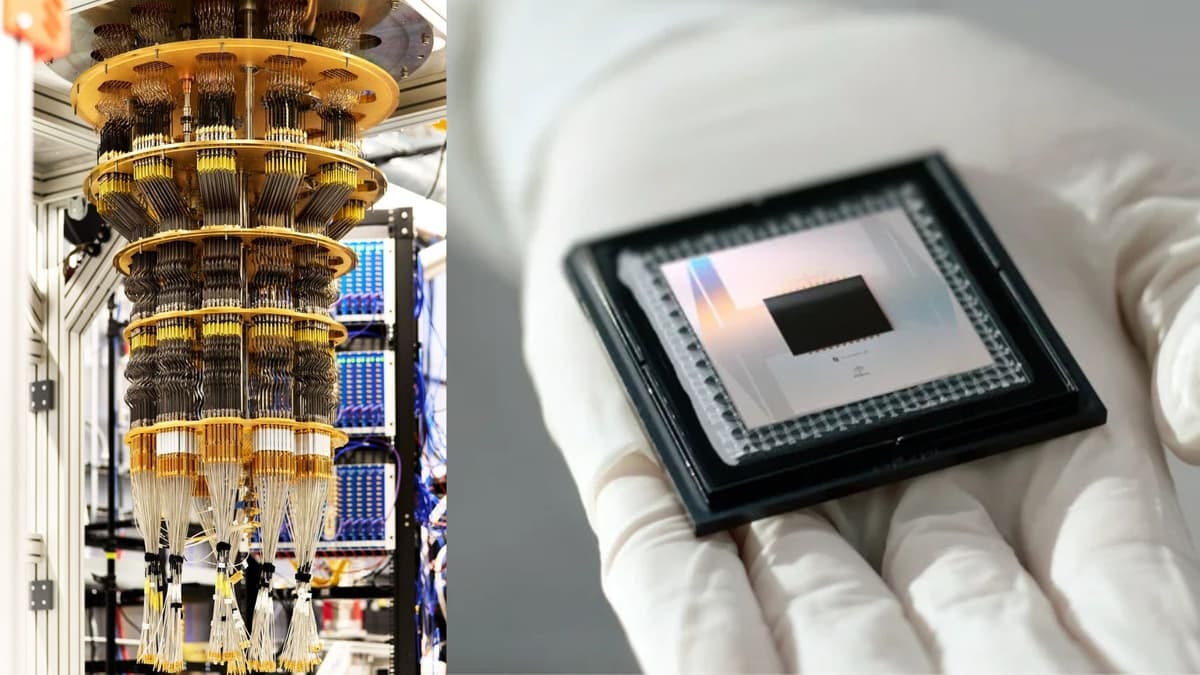
Other players like IonQ, Quantinuum, and D-Wave have followed with advances in logical qubits, hybrid systems, and cryogenic controls in early 2026. These steps don’t mean a cryptographically relevant machine is around the corner. Many experts still place that timeline roughly 10–20+ years away, but the level of certainty around those estimates is low. It could be later…or it could arrive sooner. They do, however, explain why nation-states and investors are pouring billions in now, compressing timelines faster than many expected.
Quantum risk to Bitcoin isn’t new. Developers and researchers have discussed it for more than a decade. There are a number of mitigation path suggestions but the governance issues are more challenging. Before this cycle (if we’re talking in 4-year cycles) the topic only surfaced to us normies when markets were weak and fear found oxygen. The topic has produced a predictable divide between those who dismiss the risk entirely, and those who treat it as an imminent existential threat. Reality sits somewhere in between. What I find fascinating about this situation is unlike any other existential risk that I can think of, this one comes with a very early warning and multiple paths to a solution.

Today’s quantum machines remain largely experimental. They are noisy, unstable, and far from the scale required to threaten modern cryptography. Most experts peg a cryptographically relevant quantum computer capable of breaking widely used digital signatures at 10-20 years or more away. However, timelines compress when incentives rise. Artificial intelligence is accelerating research. Governments are investing heavily. Breakthroughs rarely arrive on schedule but preparation does not require panic, it requires foresight.
I found this interview fascinating and easily digestible.
Worth a watch/listen to get an expert view on progress and timelines. However, some argue timelines to a CRQC are more like 5-10 years out, with progress moving faster than even experts expected.
For a bit of boots on the ground context, this is my third crypto winter, bear market, whatever you want to call it, since I started working in this space professionally. I personally did not give quantum FUD any credence in 2018 or 2022 but I started getting concerned that it would become a strong narrative this cycle, around late 2024, early 2025. I’ll admit, I’m not a quantum physicist, so my concerns were very surface level but it became pretty clear to me that this was going to be a thing. And honestly, I was quite frustrated that there was a lack of coverage and there was mostly silence from the folks I follow in Bitcoin. In fact, in the last year I met a few influential OGs and developers and made the mistake of bringing up quantum risk. I was met with immediate dismissal of the idea and found their attitude slightly disconcerting. They had zero concerns, thought it was total bullsh**, but didn’t really give me any explanation why they were so confident.
It wasn’t until Nic Carter started pounding the table on quantum risk to bitcoin that I started feeling better about my stack. Albeit, his essays were very technical (for me at least) and hard to fully understand, but the message hit home. We have a real problem on our hands. I noticed that his venture firm Castle Island invested in Project Eleven, a startup focused on mitigating the potential threat of quantum computing to Bitcoin, and my initial thought was that he’s just spooking the market because he’s talking his book. While digging into Project Eleven I saw that someone I knew who has had a lot of success in this space joined the team and I reached out. After meeting him, and then their founder Alex Pruden, we decided to invest in their Series A. If you’re not worried at all about quantum, that’s fine, because I’m very confident now that you’re going to be safe, but if you think it’s total BS, sitting down with these guys for an hour will undoubtedly change your mind or at least convince you to be open-minded.
I guess what I’m trying to explain is that I’ve come around full-circle from being very concerned, to sleeping well at night knowing that there are many people way smarter than me working on proposals well in advance of any real threat. That matters, because if enough people believe the threat is real, damage can occur even in the absence of one.
Much of the anxiety stems from a misunderstanding of what quantum computing could and could not do.
Bitcoin’s core properties remain intact:
• The 21 million supply cap is not at risk.
It is enforced by consensus across the network. Quantum cannot create counterfeit or new bitcoin.
• Coins sent to an address that has never been spent from remain protected.
The critical information needed to attack them has never been revealed.
• Mining would likely remain stable.
Even if quantum machines offered a temporary advantage, Bitcoin’s difficulty adjustment would neutralize it automatically.
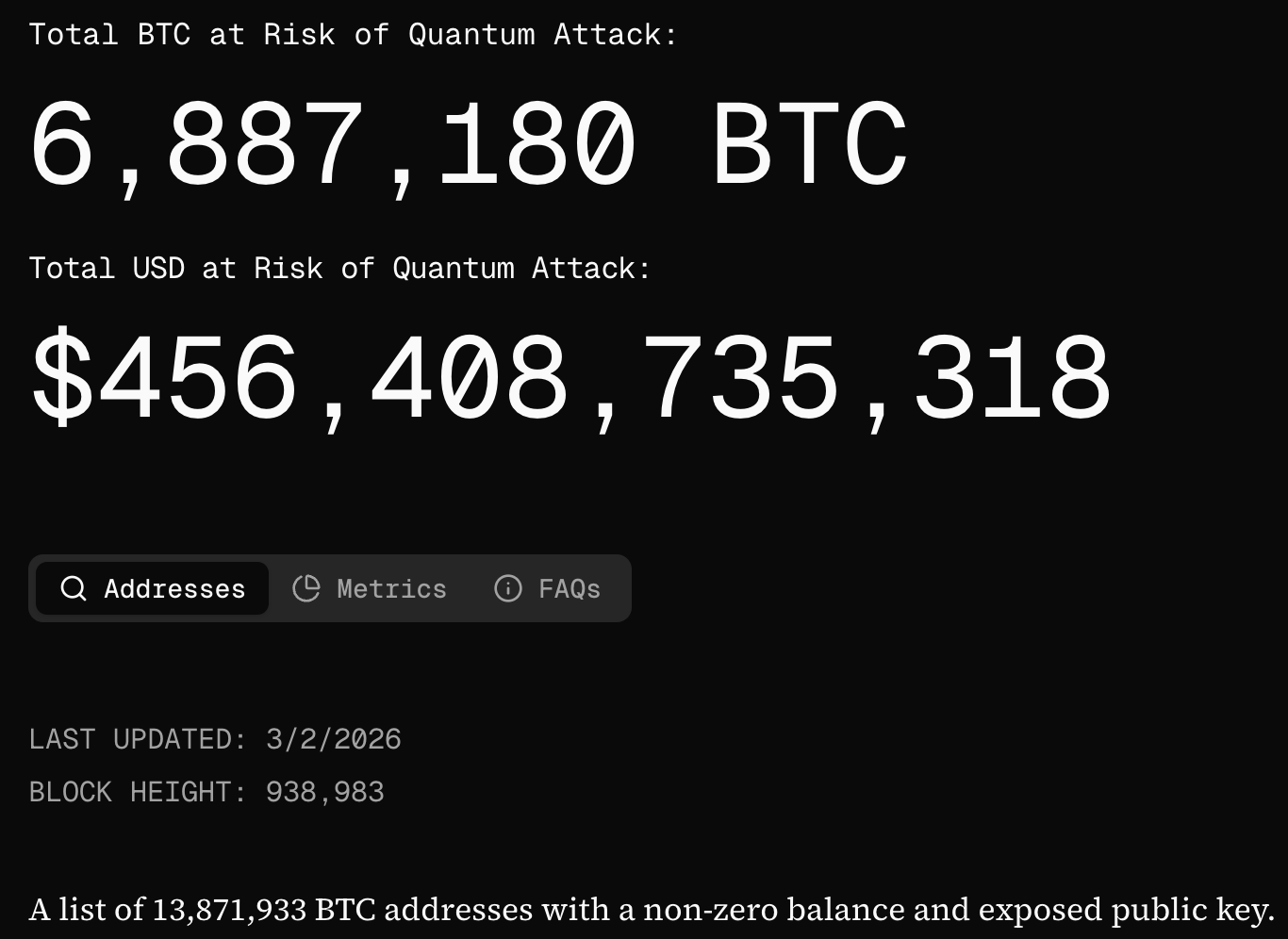
The real exposure lies elsewhere. In Bitcoin’s early years, and whenever users reuse addresses, information is revealed that could theoretically be exploited by sufficiently advanced quantum machines. Project Eleven’s Bitcoin Risq List tracker puts the potentially exposed supply at nearly 7 million BTC, including many dormant or presumed-lost coins and an estimated one million tied to Satoshi-era mining. That is a large enough bounty to draw serious attention if quantum capabilities ever get there. At the same time, some researchers argue the portion that could realistically be stolen and moved quickly may be far smaller (thousands of BTC, not millions, since cracking scattered outputs could take enormous time and compute even with powerful quantum machines).
There is also a strategic dimension that rarely makes it into the louder quantum debates. A machine capable of breaking modern cryptography would almost certainly emerge first inside a nation-state research program, not a private lab. A good example of this: during World War II, the Allies guarded their ability to decrypt Germany’s Enigma traffic so carefully that intelligence was sometimes withheld to avoid revealing the capability. A state that achieved cryptographically relevant quantum computing would face similar incentives. Quiet surveillance and intelligence advantage may be worth far more than seizing coins on a public ledger. That doesn’t eliminate the risk but it suggests the first use of such technology may be hidden rather than spectacular.
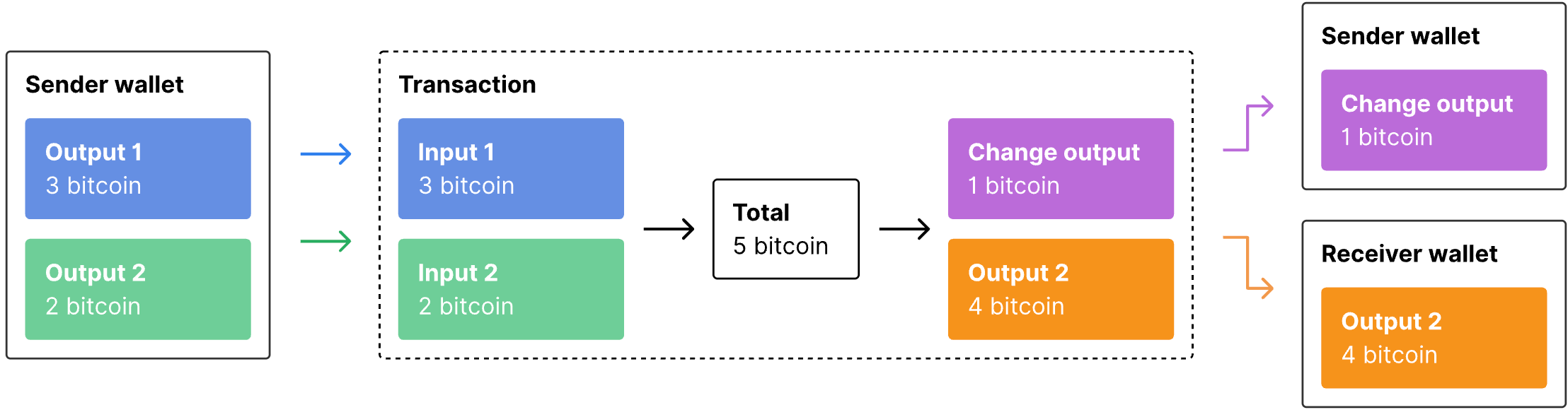
If you’re worried about the way you custody your bitcoin, the good news is that modern wallets already generate fresh addresses when you spend. Your remaining balance is quietly sent to a new destination, hiding the relevant information again. The old lock is discarded; a new one, never seen before, takes its place. In practice, you’re likely already displaying the safest possible behavior without thinking about it. If you want additional peace of mind, you can easily move your coins to a new address and accomplish the same goal. Security hygiene, not cryptographic wizardry, is the real first line of defense.
So what does this actually mean for the market?
All of this preamble is not why I decided to write this letter. The concern on most investors’ minds is a massive sell off. I suspect any movement from a Satoshi-related wallet would send the market into a tizzy. There are undoubtedly many hardcore bitcoiners who are not concerned about the implications of potentially 5%+ of the network coming back online, because they believe in bitcoin’s immutability (which I will argue would still be very much intact as long as there was consensus on a solution). But I think the majority of people who hold bitcoin would prefer not to sit through a devastating collapse in value from a massive supply unlock from unscrupulous techno-pirates.
I’m here to paint the picture that if there is a major change due to threats from advancements in quantum computing that the supply shock could very well be in the other direction. Bitcoin, in its migration to post-quantum cryptography, may end up burning or freezing some or all of the legacy, quantum vulnerable BTC from the supply.
Fortunately, the OGs and developers I mentioned I had met above don’t actually contribute anything material to Bitcoin. Bitcoin core developers are in fact, not sitting idle. In the last 12 months the conversation has quietly matured. In February 2026, BIP-360, a proposal introducing a new output type designed to enable quantum-resistant upgrades, was merged into the official BIP repository. FYI, a BIP (Bitcoin Improvement Proposal) is the formal process developers use to suggest and coordinate upgrades to the network.
BIP-360 is considered a conservative step: laying the groundwork for future post-quantum signature schemes while preserving Bitcoin’s existing structure. The approach is simple: prepare early, migrate gradually, and avoid disruption. Users who want maximum protection can move first. Institutions and custodians will likely follow. Over time, vulnerable formats can fade out organically. No emergency fork or sudden upheaval necessary. Just the same evolutionary pattern Bitcoin has followed for fifteen years: voluntary adoption driven by incentives. After thinking about this risk for some time now, I land in a simple place: we should move early. Not because the threat is imminent. But because preparedness is cheaper than emergency coordination. The hardest part is not the math. It is the coordination.
As we’ve previously discussed, if quantum capabilities ever advance far enough, a meaningful portion of Bitcoin’s supply could become vulnerable. Under this new proposal, the network might face a choice: allow vulnerable coins to be claimed under existing rules, or consider extreme defensive measures such as freezing or burning coins to prevent exploitation. Allowing claims would preserve strict immutability, the idea that history cannot be altered, but would in all likelihood destabilize markets and challenge expectations around digital property rights. Burning vulnerable coins would protect the network and prevent opportunistic extraction, but would raise philosophical questions about precedent and protocol intervention.
At first glance, even I struggled with this conundrum. Bitcoin is immutable. Rules are rules. Code is law. But immutability doesn’t mean immobility. Bitcoin has evolved repeatedly. Security rules have tightened. Signature formats have changed. Privacy improvements have been introduced. None of these changes weakened trust. They strengthened it. Immutability does not mean refusing to adapt when underlying assumptions change. It means changes occur through consensus rather than authority.
For investors, that distinction matters greatly.
Bitcoin’s integrity does not depend on never changing. It depends on changing very carefully, transparently, and with overwhelming agreement from a decentralized pool of network participants. If defensive measures were ever necessary, they would not represent a failure of the system. They would represent a sort of miracle of defense and self-preservation.
Now imagine the market implications. Bitcoin’s scarcity narrative has always been simple: there will only ever be 21 million coins. But not all coins circulate. Millions are lost. Others remain dormant. Some may never move again. If vulnerable outputs were permanently removed from circulation rather than claimed, coins long assumed lost would become provably inaccessible. Supply would harden. This would not be akin to a halving. It’s not monetary policy in any stretch of the imagination. It would be a tremendous boost in scarcity reinforced by security evolution. In markets where price is driven by marginal supply, even a small structural reduction can have outsized effects. Bitcoin has historically responded violently to far smaller changes in available supply.
The mere possibility of such an outcome could influence valuation models, custody practices, and institutional allocation decisions long before any technical action like a burn occurs. Bitcoin could face a moment where its security upgrade simultaneously strengthens its scarcity narrative. If the network moves toward this direction — a structural reduction in circulating supply, my bet is that it will feel like a monumental supply shock, eclipsing Bitcoin’s first halving in 2012, when the reward dropped from 50 to 25 BTC and kicked off a massive bull run on scarcity alone.

Okay, here’s the part of the essay where I risk losing any bit of credibility I had in the first place.

Bitcoin’s earliest coins including those mined by Satoshi used formats that expose more information than modern standards. At the time, this was practical as the network was essentially experimental. Quantum wasn’t really a thing yet and threats were mostly academic. There were real adversaries to contend with (governments, hackers, etc.) and simplicity was prioritized. But viewed through today’s lens, those early outputs represent one of the largest dormant bounties in financial history. If quantum computing ever threatened Bitcoin’s security model, the reward embedded in those coins would be a honeypot large enough to mobilize global research, defensive coordination, and rapid migration to new security standards. Not because anyone ordered it but because incentives demanded it. While Satoshi never wrote about quantum attacks specifically, in 2010 while discussing cryptographic risk, he noted that if a core hash function were ever broken, the community could agree on the last honest state and transition forward. The principle was clear: Bitcoin was designed to survive the evolution of cryptography. Not by freezing in time, but by coordinating when necessary.

I wonder, did Satoshi leave those early coins exposed to create a future incentive? Did he or she design a system where incentives drive collective action in moments of stress? Bitcoin does not rely on trust, it relies on aligned incentives. Tin foil hat off for now. But the incentive structure is really fascinating to me.
Quantum computing is often framed as a threat to bitcoin (little “b” since we’re referring to the price of bitcoin in this essay, not the network). In reality, it is a stress test of digital trust. Bitcoin’s supply cap remains secure. Modern wallet practices already mitigate most risks. Migration paths are emerging and some would say they’re already present. What quantum ultimately tests is not the network’s mathematics. It tests its capacity to coordinate, adapt, and preserve trust without a central authority.
In my opinion, Bitcoin’s greatest challenge is not technical. It will be philosophical.
And like every challenge it has faced before, the outcome will not be decided by decree, but by the incentives and choices of the people who rely on it.
If quantum ever arrives, Bitcoin will not break. It will evolve.
And the market will be watching every step of the way.
Bitcoin was built to survive the test of time. The more it is tested, the harder it becomes.
No doubt, the threats will evolve. How could they not when the network was built to challenge the most powerful institutions on earth?
Quantum computing may arrive slowly or all at once.
Bitcoin will endure, not because its code never changed, but because its incentives, its community, and its purpose proved stronger than any single technological threat.
Stack when it hurts most, friends.
Below are several sources that shaped my thinking on this topic.
Nic Carter on quantum risk: Murmurations II (his pieces from late 2025/early 2026)
Satoshi’s 2010 comments on cryptographic risk (e.g., hash function breaks and community transition)