(Any views expressed below are the personal views of the author and should not form the basis for making investment decisions, nor be construed as a recommendation or advice to engage in investment transactions.)
Good morning,
Or if you’re Trump, Elon, Jensen, Tim Cook, and co…wǎnshàng hǎo!
While I’m tempted to dig into everything that went on this week, I’m going to stay disciplined and give you the part two I promised last week. If you read The Abundance Trap you might remember I went down a bit of a rabbit hole on AI, debt, layoffs, UBI, fiat debasement, and the strange feeling that we may be heading toward a world that becomes more abundant and more unstable at the same time. TLDR: productivity explodes, asset owners do extremely well, governments are forced to spend even more money to keep the social fabric together, and the average person becomes poorer even as the economy becomes more technologically advanced.
It took awhile for me to get there but I ended the note with what I think is one of the most important questions of the next decade: how does the world settle trade when nobody fully trusts each other anymore?
For most of our lives, the answer was obvious: use dollars. What was true decades ago is still true today but becoming more brittle at a rapid pace. The US is at the center of the global financial system, the dollar is the reserve currency, Treasuries are treated as the risk-free asset, commodities are priced in dollars, trade clears through dollar rails, central banks hold dollars, corporations borrow in dollars, and everyone has to use the same architecture. That is the unipolar world. One superpower, one reserve currency, one dominant set of rails (SWIFT).
That world is not gone...completely, but it’s changing fast. The US is still the most powerful country on earth and the dollar is still the deepest, most liquid, most important currency in the world, so while I don’t think the dollar dies tomorrow, I do believe very strongly that the world is fragmenting and the dollar system is no longer viewed as neutral enough by everyone forced to use it.
China is rising, Russia has been pushed outside parts of the Western financial system but remains a nuclear-armed superpower, Iran has proven to be a formidable opponent, the broader Middle East is becoming more independent, the Global South is looking for alternatives, and countries are increasingly trying to trade directly with each other. Alliances are shifting, financial systems are fragmenting, and trust is breaking down. Countries still need to trade, but they increasingly do not want national wealth trapped inside rails that can be frozen, sanctioned, or turned off by someone else.

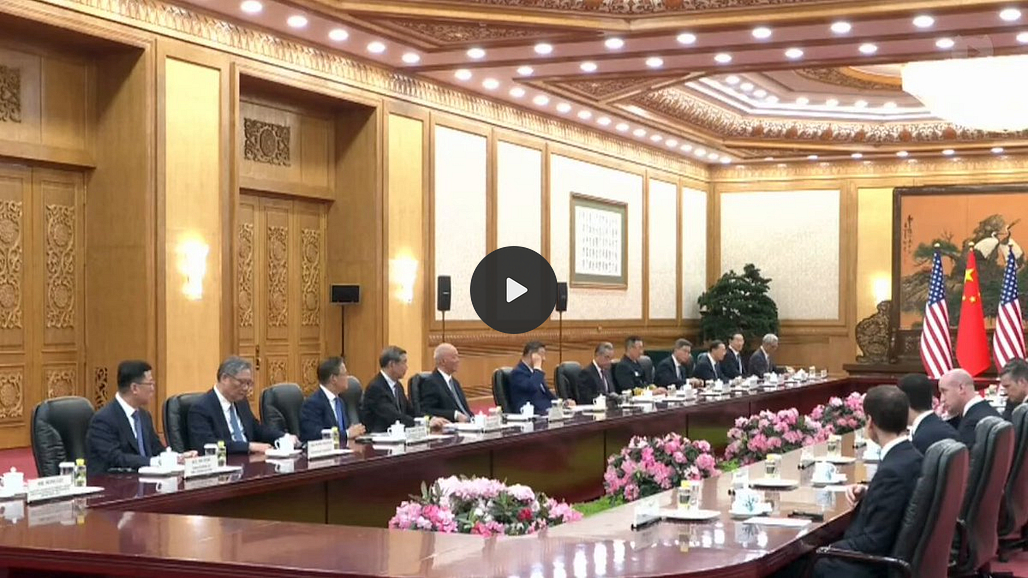
There are a couple ways to read this.
Maybe it’s a sign that Trump and China are getting friendly again, the adults are back in the room, and the two largest economies on earth are trying to find a path that avoids blowing up global trade.
Or maybe it’s the opposite.
Maybe this is what desperation looks like when the US realizes it can no longer bully the world the way it used to, and has to show up in Beijing with some of the most important CEOs in America sitting around the table like collateral. Either way, it’s another reminder that the world is changing fast. China is not some emerging market side character anymore. It is a superpower, and the US knows it.
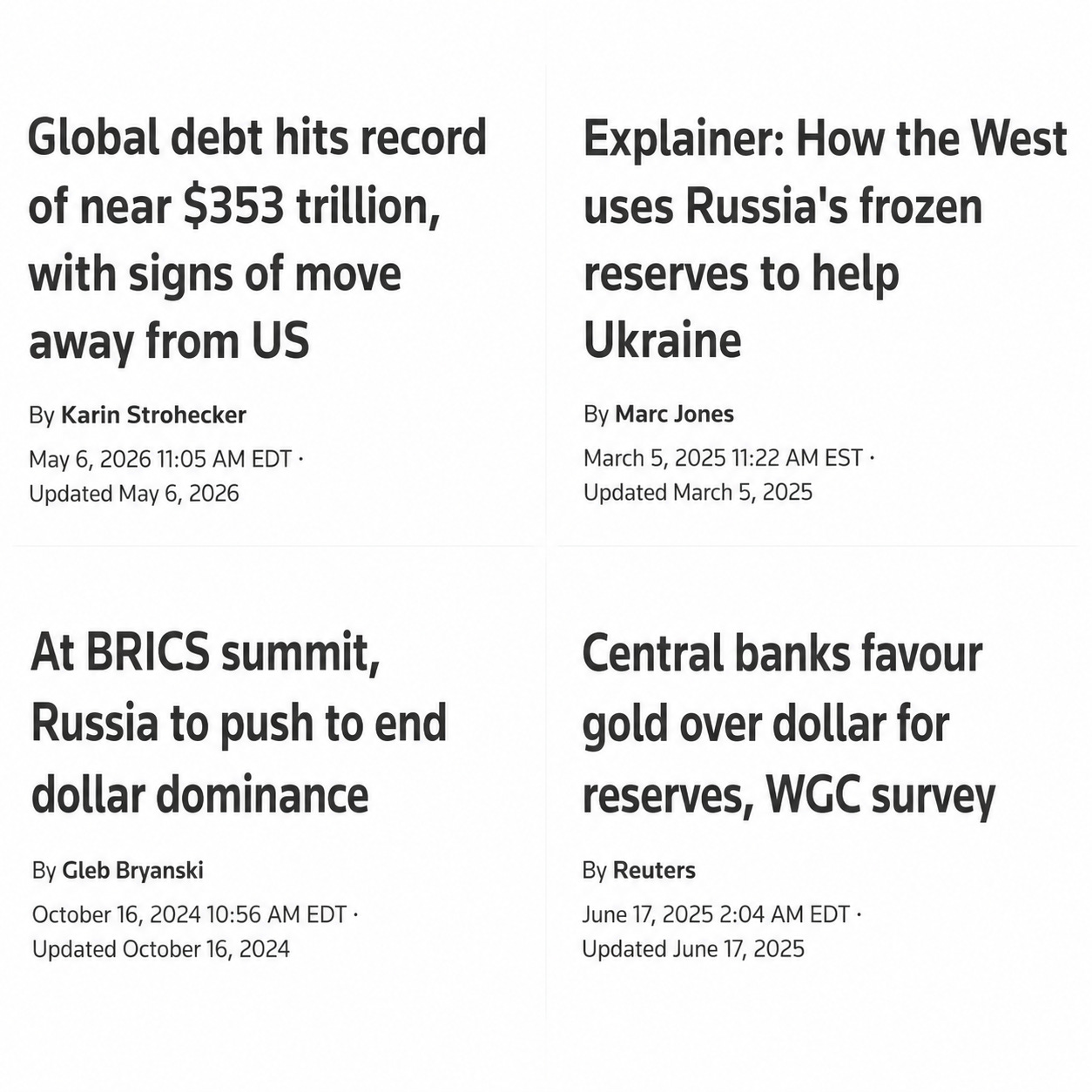
Trade does not stop because trust disappears. China still needs energy, Europe still needs commodities, the Middle East still needs customers, the US still needs foreign buyers for its debt, and emerging markets still need capital. Goods, food, oil, copper, chips, wheat, weapons, and everything else still need to move around the world. Settlement just gets harder when the monetary system everyone relied on starts looking less like neutral plumbing and more like a geopolitical weapon.
You need not be pro-Russia, pro-China, anti-American, or anything else to understand the game theory here. You just have to be honest: if you are a sovereign nation that watched the West freeze Russian reserves, your takeaway is probably not, “That could never happen to us.” Your takeaway is probably more like, “We need a plan B.” If you are sitting on large surpluses, producing valuable commodities, or trying to build independence from the US, you are thinking seriously about what you hold as reserves and how you settle value in this new world.
Historically, the answer has been gold and it still is.
Central banks understand gold because it has thousands of years of monetary history, it is nobody’s liability, it cannot be printed by a central bank, it sits outside the fiat system, and it does not depend on someone else’s promise. There is a reason gold has survived every empire, currency experiment, political regime, and financial panic.
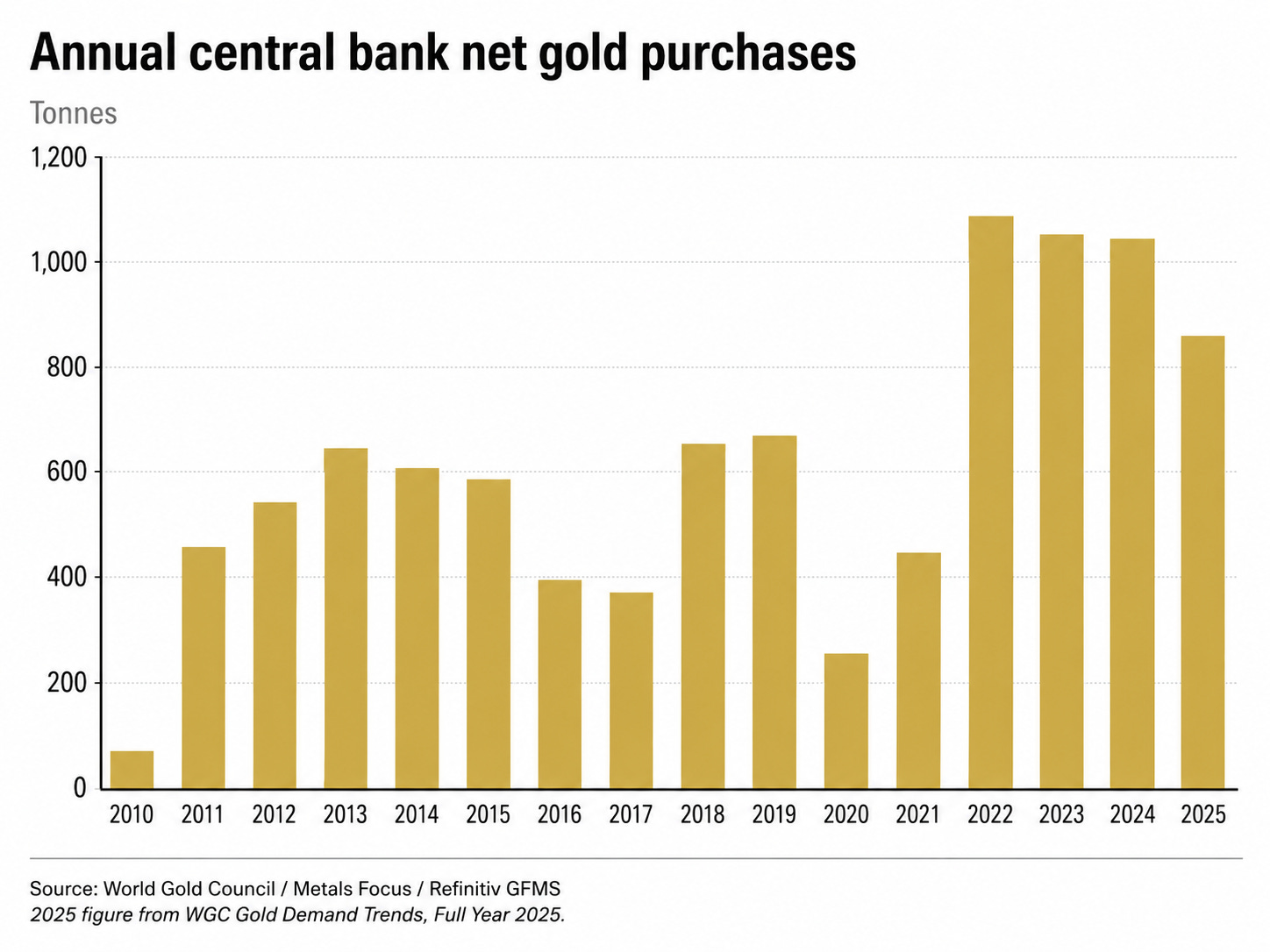
Central banks are not buying gold because they think the world is becoming more trusting. They are buying it because they know the opposite is happening.


Gold works as a reserve asset sitting in a vault. It works as a political statement, a long-term store of value, and an insurance policy against fiat debasement. At the asset level, gold makes sense because it is nobody’s liability. It is not a bond, not a currency, not a deposit, and not someone else’s IOU. It has always made sense for countries trying to move away from the credit risk of paper promises.

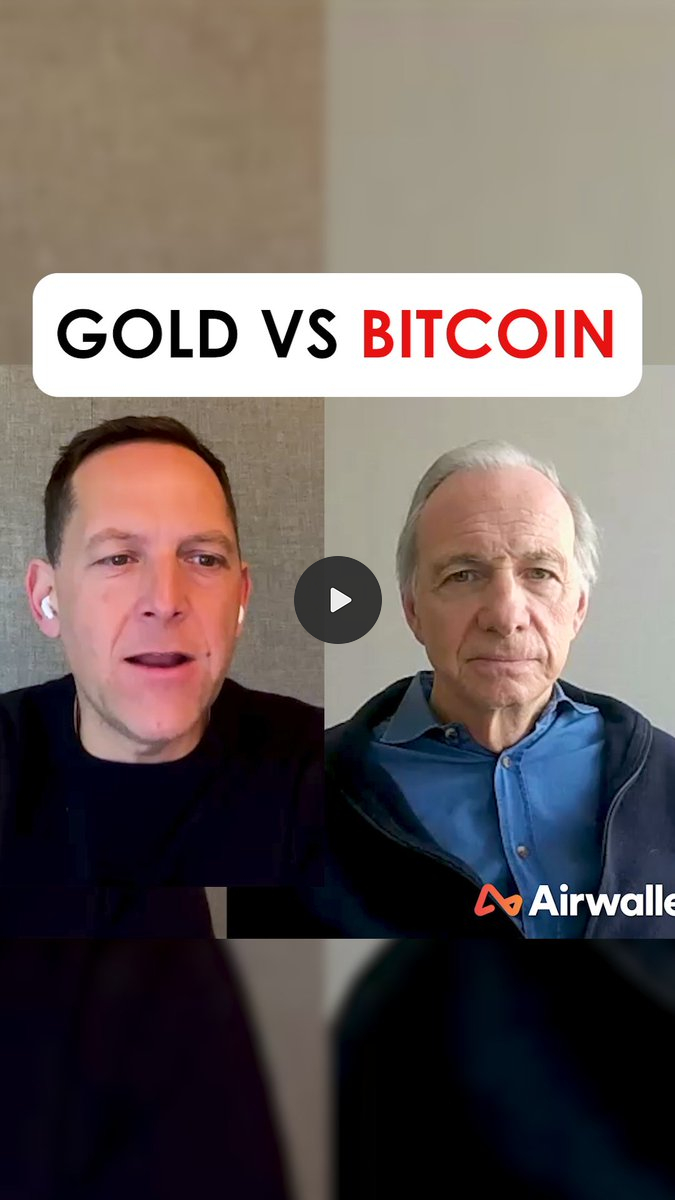
In my opinion, gold is just not effective enough for the world we’re living in today. It honestly boggles my mind that some of the greatest minds in macro can’t see the problem.
As a modern global settlement asset, gold has obvious problems that people gloss over because gold has such a powerful historical brand. It is hard to move, expensive to secure, and operationally cumbersome. It requires vaults, guards, auditors, insurance, armored transport, custodians, and trusted jurisdictions. If a country wants to settle a large transaction in gold, are they really moving bars around the world every day? Are they flying it, shipping it, auditing it, and re-auditing it every time trade happens? And if the gold does not physically move, what are we really talking about?
We are back to paper claims. We are back to custody risk. We are back to “I promise the gold is there.”
That may work when everyone trusts the vault, custodian, auditor, and legal system, but that is not the world we are moving into. In a low-trust world, physical gold is not the same thing as paper gold. Gold is trust-minimized if you physically hold it, but at scale, in global trade, it often becomes trust-dependent again. That is the problem. The asset itself is neutral, but the infrastructure around it is not.
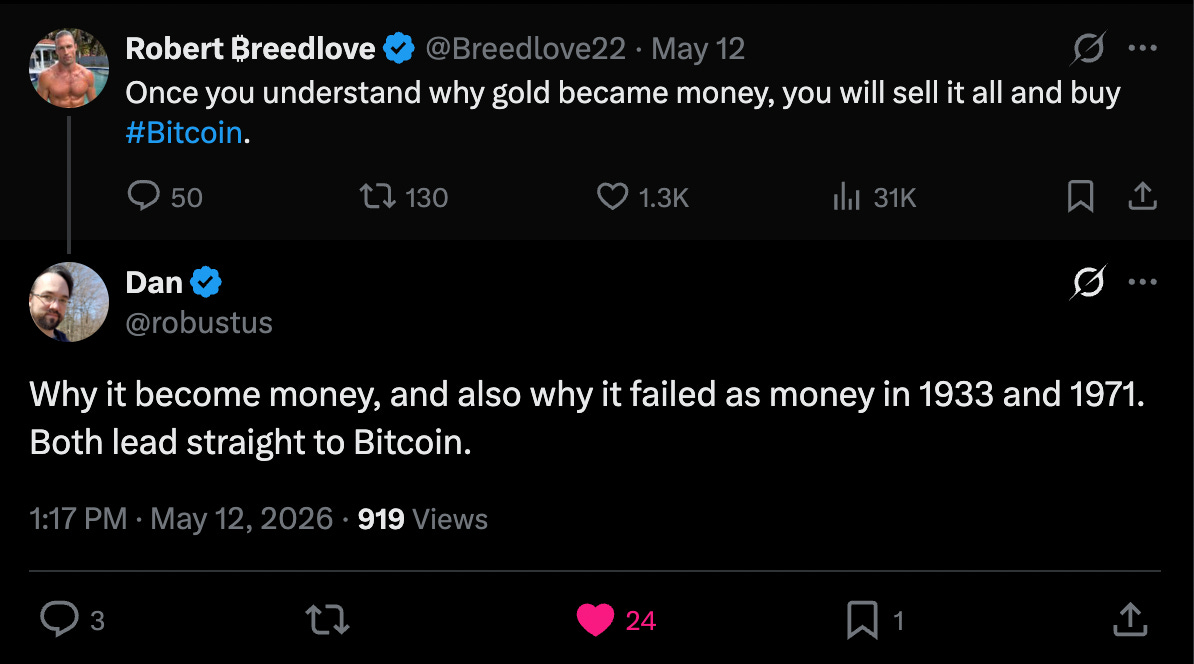
Bitcoin is what gold wanted to be if it had been invented for the digital age.
It is a scarce desirable property in digital form. It has no issuer, no central bank, no board of directors, no CEO, no office, no country, no dilution schedule, and no idiot grandson who inherits the empire and ruins everything. It exists outside the traditional financial system, can be verified by anyone, held directly, and moved globally without asking a bank, government, or clearinghouse for permission.
That matters because wealth is not preserved by holding money that someone else can print. Wealth is preserved by owning scarce desirable property. Real estate, businesses, trophy assets, mineral rights, gold, productive assets, anything that cannot be created infinitely by a government or machine. The problem is that most scarce property has trade-offs. Real estate is trapped in one jurisdiction (they typically come for this first by way of property tax). Art is illiquid and hard to move. Private businesses come with execution and regulatory risk. Gold is physical, heavy, slow, and unless you hold it yourself, you are trusting someone else.
Bitcoin is different because it is scarce desirable property that can move at the speed of the internet and, in the most extreme case, be held in your head. The delivery in the clip below is a little rough, but the point is a good one because it brings this down to the individual level.

Bitcoin is a global settlement network. Gold was the highest form of portable capital for the analog world. Bitcoin is the highest form of portable capital for the digital world. The modern economy does not move at the speed of ships, vaults, and armored trucks anymore. Capital moves 24/7, trade happens across time zones, markets never really close, and financial systems become more digital every year.
So if the world needs a neutral settlement asset for the digital age, what actually makes sense? Gold still has a role, but are countries really going to move billions of dollars of gold around the world every day to settle trade? Are they going to trust paper gold claims in someone else’s vault? Are they going to rely on custodians and auditors in jurisdictions they may not trust a decade from now? The more fractured the world becomes, the more important neutral settlement becomes, but the harder it is to trust the intermediaries required to make analog settlement work.
Bitcoin is revolutionary exactly for this reason. It starts from the assumption that nobody can be trusted over a long enough timeline. Not the bank, not the government, not the custodian, not the empire, not the regulator, and not the grandson of the guy you trust today. That is why the network is decentralized, why anyone can verify it, why the supply is fixed, and why the rules matter. Bitcoin works precisely because it is not the traditional financial system. It is a monetary network designed for a world where trust is collapsing.

That does not mean Bitcoin replaces the dollar tomorrow, central banks all announce Bitcoin reserves next week, or gold disappears. It means the world has a settlement problem, a trust problem, and a debasement problem happening at the same time, and Bitcoin is the only asset that directly addresses all three in a digital format.
That is why I think most people still underestimate it. They look at Bitcoin like a tech stock, a speculative asset, or a high-beta Nasdaq proxy, which makes sense because in the short term Bitcoin often trades like a risk asset. But the better way to understand Bitcoin is as a new geopolitical monetary asset emerging exactly when the old trust-based system is starting to fracture.
Bitcoin is not someone else’s promise. That is the whole point. It is not a claim on money. It is not a claim on gold in a vault. It is bearer digital property. In a world of competing currencies, exploding debt, sanctions, capital controls, banking risk, frozen reserves, and endless fiat debasement, that distinction may become one of the most important distinctions in finance.
Gold was the answer for the world we came from. Bitcoin is the answer for the world we are going into.
New Fed Chair Kevin Warsh agrees!

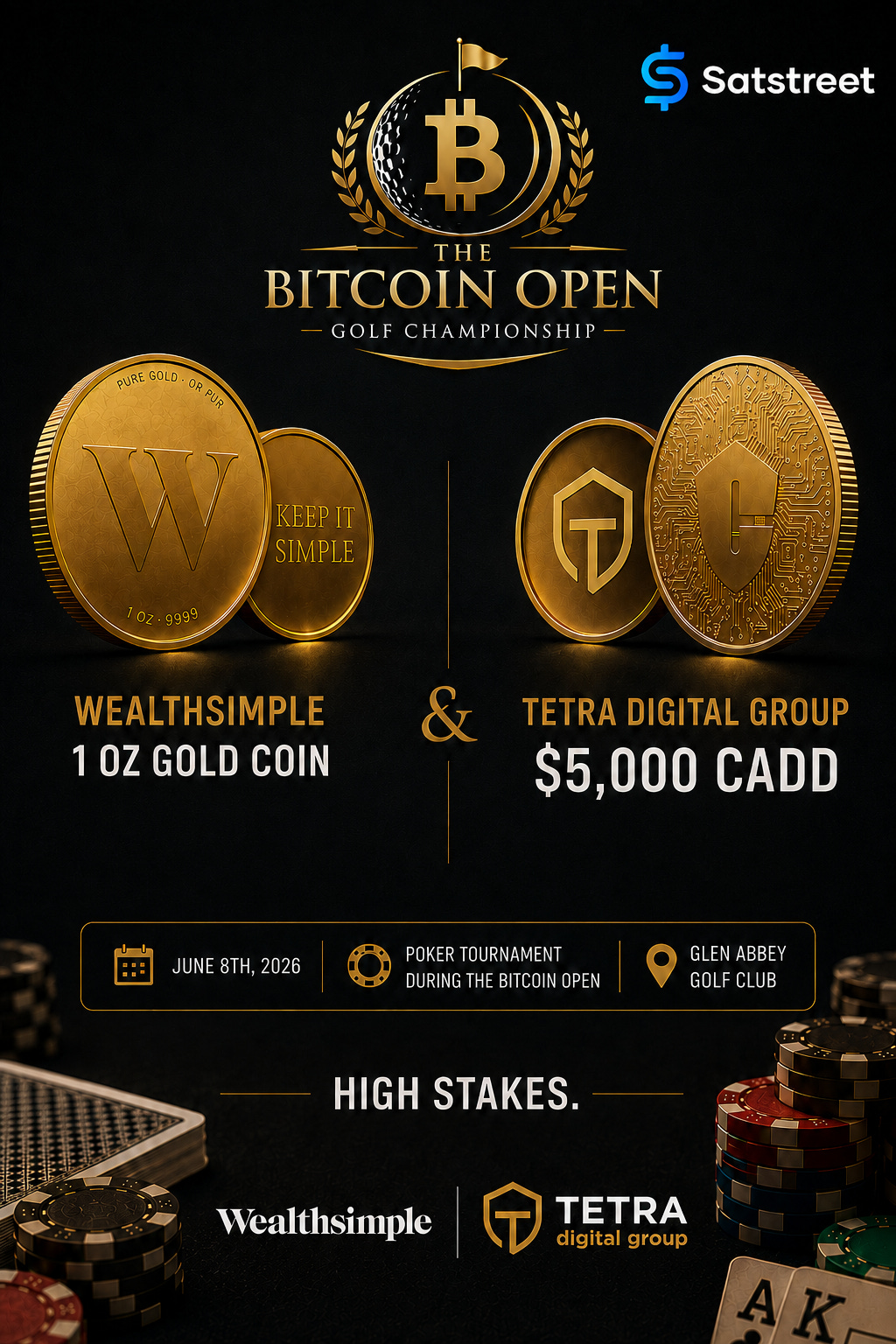
Speaking of gold…if you made it this far, a quick shoutout to our team for putting together The Bitcoin Open on June 8th at Glen Abbey. Wealthsimple is generously putting up a 1 oz gold coin (~$6.3K CAD value) as one of the poker prizes, which feels pretty ironic after the note you just read. Tetra has also donated 5,000 CADD, which is a big stablecoin cherry on top.
The event is shaping up to be a great day of golf, poker, and networking with people across Bitcoin, finance, wealth, and private markets. We still have a few spots left, so if you want to join us, come spend the day at Glen Abbey.